Vegetation 1
Vegetation Types
Vegetation types
Mangroves
occur, usually in only a narrow band, in tidally flooded areas all along the southeast Brazilian coast. The most extensive areas of mangroves are around Santos, SP.
Restinga
is a low forest growing on sand dunes (Pic. 2) most often found on barrier islands and on other areas immediately adjacent to the shore. The most extensive areas of restinga are south of Angra dos Reis and in the Iguape-Ilha Comprida area. Restinga is characterized by some unique species such as Phylloscartes kronei and Formicivora littoralis, Formicivora erythronotos (Song 1) and Tangara peruviana.
Tropical lowland and sub-montane forests.
Most of the area dealt with in this guide was originally covered with one type or another of tropical forest. Pic. 3 shows the original extent of all types of such forests in the whole of eastern Brazil. In the more restricted area covered by this guide these forests can be sub-divided into a number of different types which are dealt with in more detail in the next section (Vegetation 2). The largest number of endemic species occurs in these forests.
Montane forests.
Two types of montane forests occur within the area: A. In the north, at elevations above 1500 meters in the Serra da Mantiqueira, the Serra Bocaina (the northern section of the Serra do Mar), and also immediately to the east in the Serra dos Orgãos are sub-tropical broadleaf evergreen forests of the Podocarpus type dominated by Podocarpus lamberti. These are areas of heavy annual rainfall with a relatively cool climate where the trees are filled with epiphyes and mosses. (Pic. 4). Species characteristic of this area include Tijuca atra, Carpornis cucullatus, Phylloscartes difficilis, Neopelma chrysolophum (Song 2), and Dysithamnus xanthopterus. The higher slopes of these mountains are covered with dense scrub interspersed with single trees. Species characteristic of this area are Stephanoxis lalandi, Phyllomyias fasciatus, Drymophila genei, Knipolegus nigerrimus, Muscipipra vetula, Stephanophorus diadematus and Oreophylax moreirae (Song 4). B. Further south and west sub-tropical coniferous forests of the Araucaria type occur (Pic. 5), dominated by Araucaria angustifolia. In the higher parts of the south (west of Iguape - Ilha do Cardoso) are large areas covered by these forests but they are also found as far north as the Campos do Jordão area. Species characteristic of this area are Amazona vinacea, Phibalura flavirostris, Leptasthenura setaria, Phyllomyias virescens, and Piprites pileatus.
Cerrado and Cerradão
These terms apply respectivly to bush and tree savanna (i.e. grassland interspersed with either bushes or trees). This biome is now almost completely turned over into agricultural land. It occurs (or occured) inland, immediately to the north and west of the rainforest belt in areas where rainfall is generally less than 1000mm/year. Typical species are Cariama cristata, Colaptes campestris, Serpophaga subcristata and Phyllomyias fasciatus.
Campos
is the Brazilian term for grassland. This is of two sorts: A. Areas of high grass campos (or long grass prairie) occur in the northwest of the area, e.g. around Itirapina (Pic. 6). Typical species of this area include Micropygia schomburgkii, Melanopareia torquata, Polystictus pectoralis (Song 3),Emberizoides herbicola and Coryphaspiza melanotis. B. High montane campos occurs above the tree and scrub line in the Serra dos Orgãos, Serra da Mantiqueira and near Campos do Jordão, (e.g. on the Pico de Itapeva or near São Jose dos Alpes). This is humid grassland interspersed with scrubby areas and rocky slopes and, although not temperate, resembles the paramos of the Andes (Pic. 7). Typical species of these highest altitudes include Oreophylax moreirae (Song 4), Poospiza thoracica, Embernagra platensis, Colibri serrirostris and Anthus hellmayri.
Images and recordings on this page
-
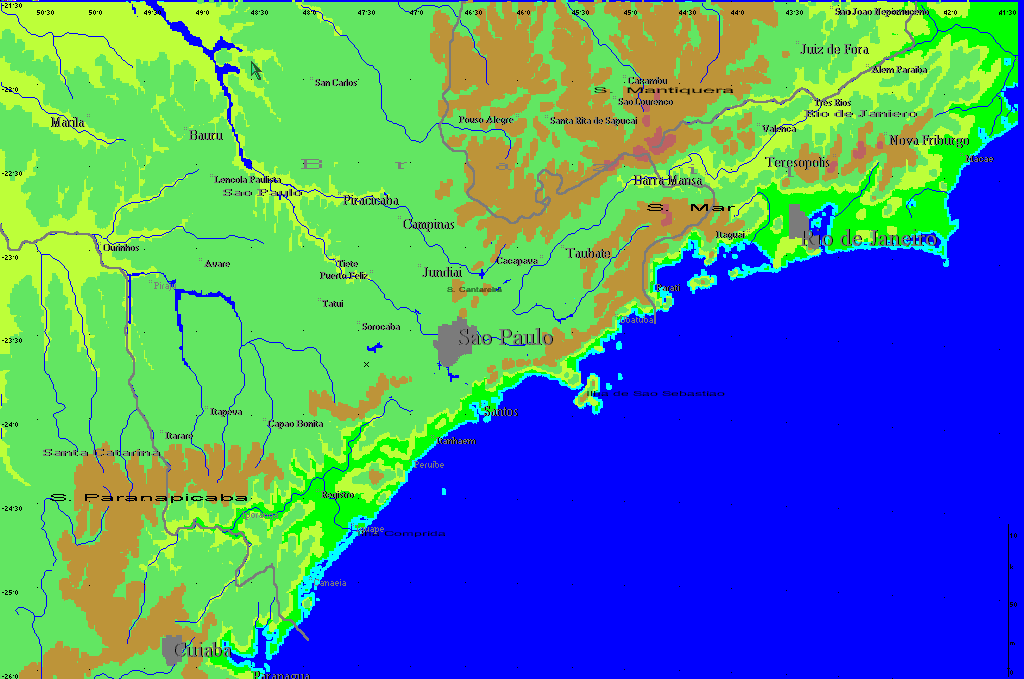
Area Map -
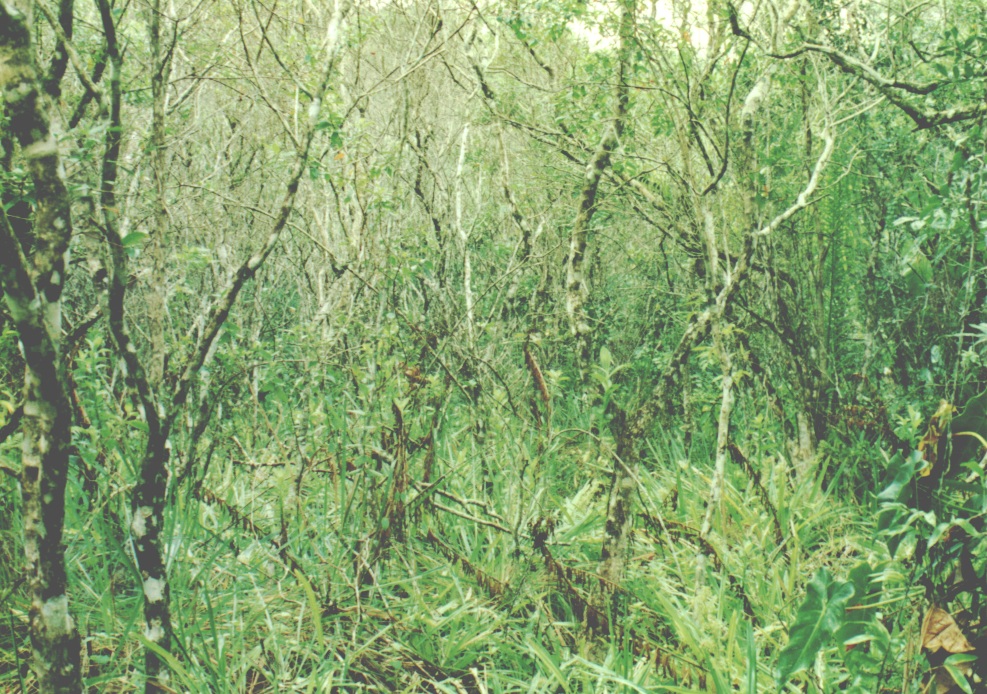
Restinga, Ribeira Valley, near Iguape. Biotope of Phylloscartes kronei. -
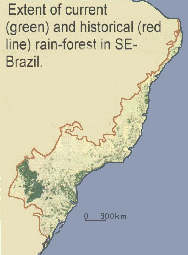
The extent of current and historical rainforest in eastern Brazil 25. -
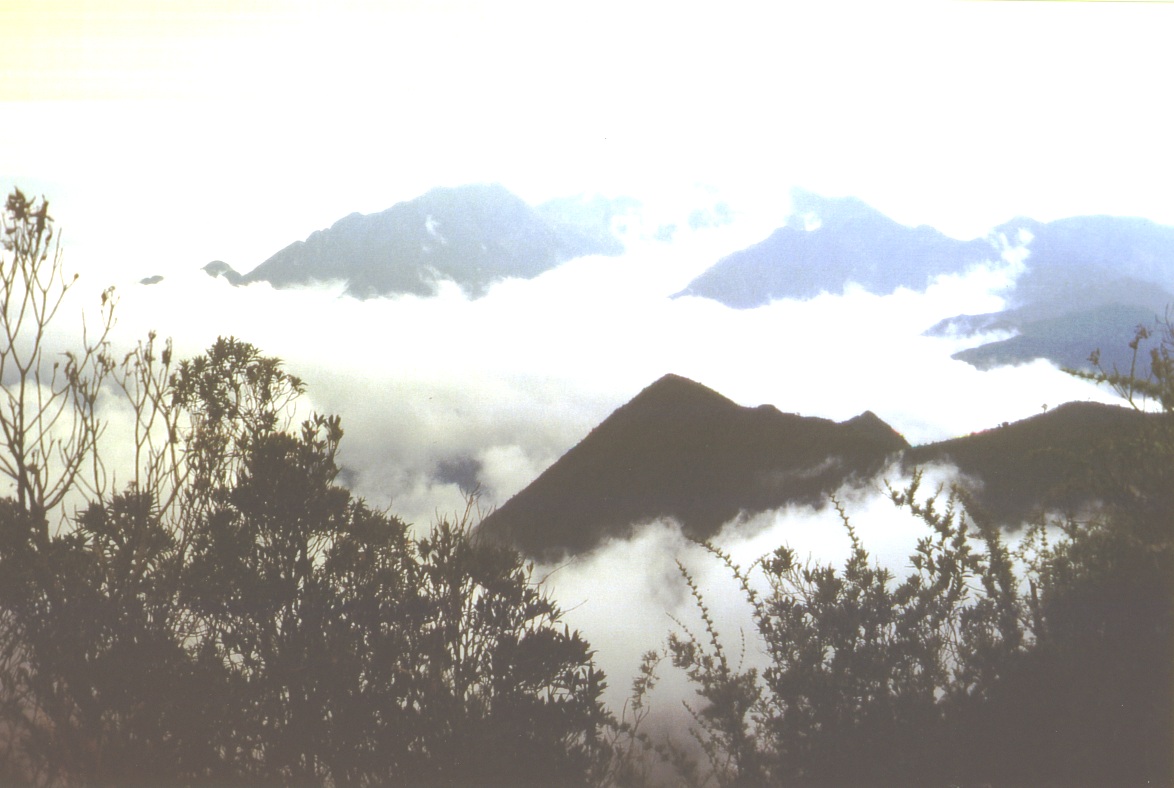
Serra da Mantiqueira from the Agulhas Negras road -
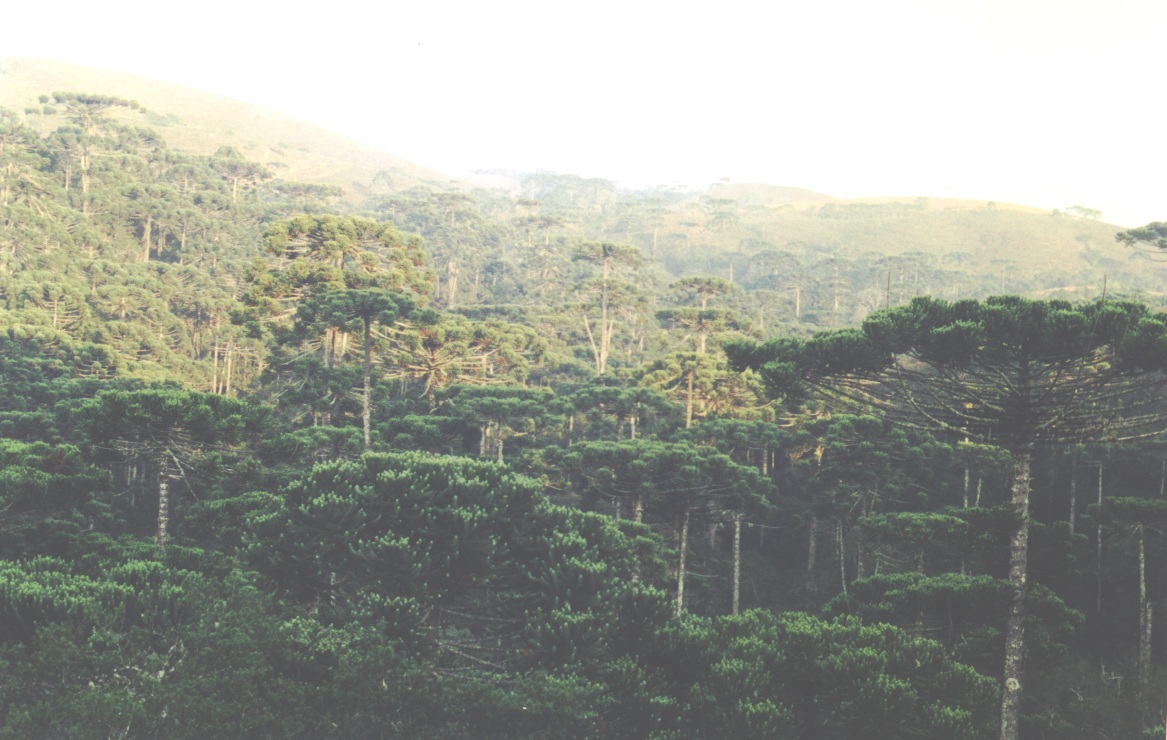
Araucaria grove. Biome of Amazona vinacea. -
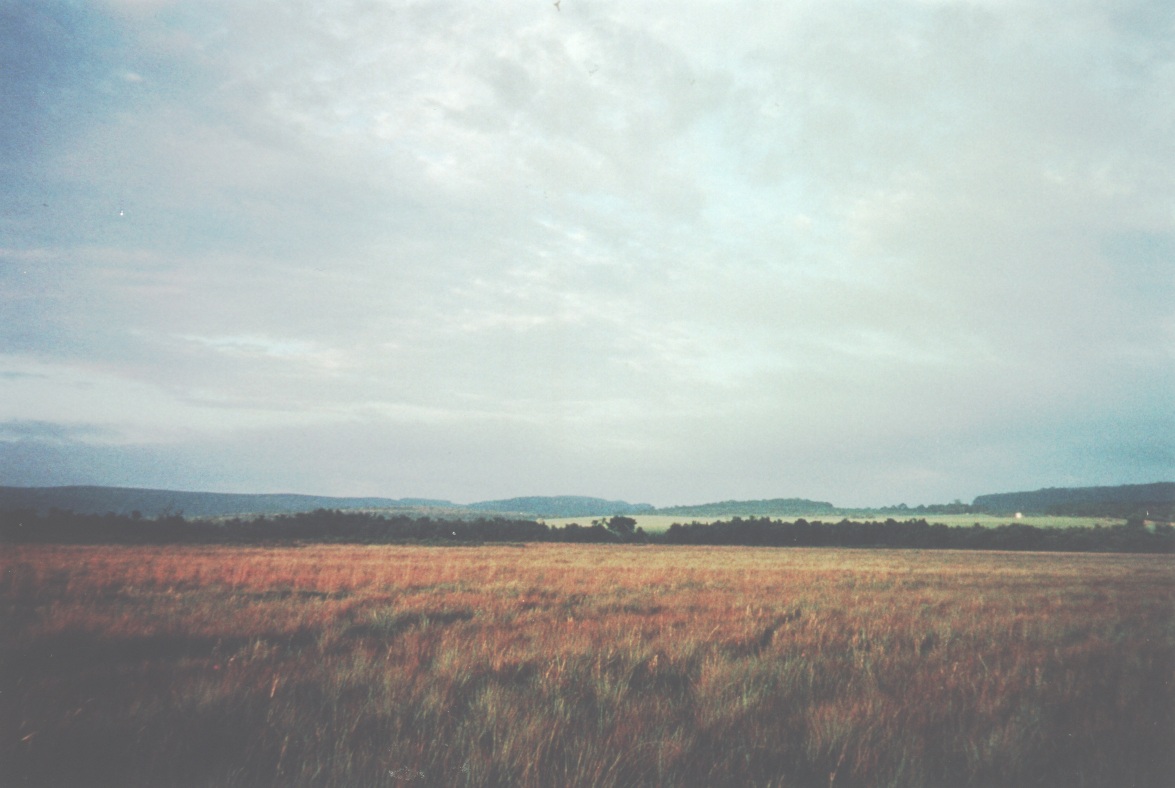
Campos near Itirapina. -
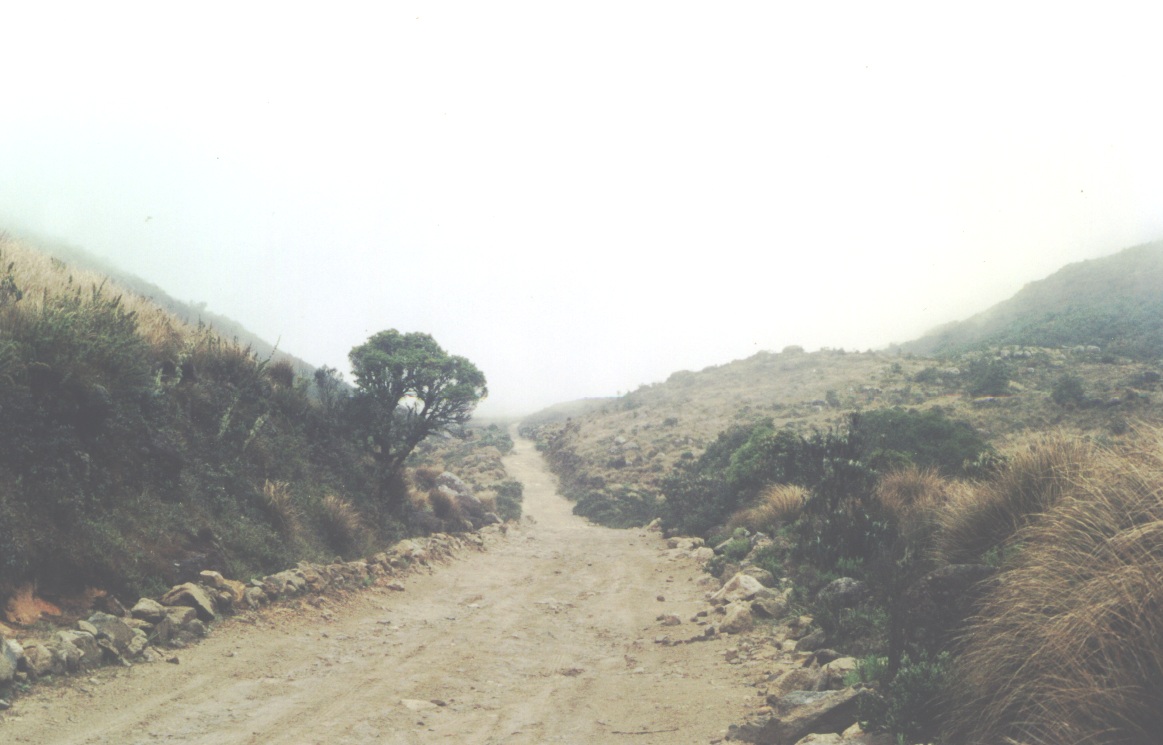
Upper Agulhas Negras road. High montane campos.
-
Formicivora erythronotos. Song. Pereque, near Angra dos Reis, 10/16/99. Sunny, 30°C. Open scrub. With Zonotrichia capensis, Trogon viridis, Cacicus haemorrhous, Capsiempis flaveolus, Pyriglena leucoptera.
-
Tijuca atra. 10/20/99, Serra Mantiqueira, Agulhas Negras road. Clear, 20°C. High altitude forest, 2000 meters.
-
Polystictus pectoralis. Itirapina, 11/12/95. Sunny, 30°C. Open cerrado with low scrub.
-
Oreophylax moreirae. Serra Mantiqueira, 11/18/98. Sunny, 20°C. High altitude scrub. With Turdus rufiventris, Thamnophilus ruficapillus, Phylloscartes difficilis.
Where these come from
The work names each item by a file stem in its own caption records. The captions above are those records with the stem and its separators removed; where an item sat on the original page was not recorded and is not guessed.
- c05da526 original-cd/CD01/SEBrazil/PICTURE/C05DA526.BMP
- A35 original-cd/CD01/SEBrazil/PICTURE/A35.jpg
- forest . original-cd/CD01/SEBrazil/PICTURE/forest.bmp
- A15 original-cd/CD01/SEBrazil/PICTURE/A15.JPG
- A65 original-cd/CD01/SEBrazil/PICTURE/A65.jpg
- A43 original-cd/CD01/SEBrazil/PICTURE/A43.JPG
- A53 original-cd/CD01/SEBrazil/PICTURE/A53.JPG
- 441006 original-cd/CD01/SEBrazil/WAV/441006.mp3
- 441007 original-cd/CD01/SEBrazil/WAV/441007.wav
- 441008 original-cd/CD01/SEBrazil/WAV/441008.mp3
- 441009 original-cd/CD01/SEBrazil/WAV/441009.mp3
Works cited on this page
- 25. Brooks, T. 2000. Living on the edge. Nature 403:26-29.
Numbers are the work's own; they address the Disc 1 · 2011 bibliography.
This page on the other discs
Disc 2 · 2001
Vegetation 1 — Vegetation Types · page 6 of that disc
Vegetation types
Mangroves
occur, usually in only a narrow band, in tidally flooded areas all along the southeast Brazilian coast. The most extensive areas of mangroves are around Santos, SP.
Restinga
is a low forest growing on sand dunes (Pic. 2) most often found on barrier islands and on other areas immediately adjacent to the shore. The most extensive areas of restinga are south of Angra dos Reis and in the Iguape-Ilha Comprida area. Restinga is characterized by some unique species such as Phylloscartes kronei and Formicivora littoralis, Formicivora erythronotos (Song 1) and Tangara peruviana.
Tropical lowland and sub-montane forests.
Most of the area dealt with in this guide was originally covered with one type or another of tropical forest. Pic. 3 shows the original extent of all types of such forests in the whole of eastern Brazil. In the more restricted area covered by this guide these forests can be sub-divided into a number of different types which are dealt with in more detail in the next section (Vegetation 2). The largest number of endemic species occurs in these forests.
Montane forests.
Two types of montane forests occur within the area: A. In the north, at elevations above 1500 meters in the Serra da Mantiqueira, the Serra Bocaina (the northern section of the Serra do Mar), and also immediately to the east in the Serra dos Orgãos are sub-tropical broadleaf evergreen forests of the Podocarpus type dominated by Podocarpus lamberti. These are areas of heavy annual rainfall with a relatively cool climate where the trees are filled with epiphyes and mosses. (Pic. 4). Species characteristic of this area include Tijuca atra, Carpornis cucullatus, Phylloscartes difficilis, Neopelma chrysolophum, and Dysithamnus xanthopterus. The higher slopes of these mountains are covered with dense scrub interspersed with single trees. Species characteristic of this area are Stephanoxis lalandi, Phyllomyias fasciatus, Drymophila genei, Knipolegus nigerrimus, Muscipipra vetula, Stephanophorus diadematus and Oreophylax moreirae (Song 4). B. Further south and west sub-tropical coniferous forests of the Araucaria type occur (Pic. 5), dominated by Araucaria angustifolia. In the higher parts of the south (west of Iguape - Ilha do Cardoso) are large areas covered by these forests but they are also found as far north as the Campos do Jordão area. Species characteristic of this area are Amazona vinacea, Phibalura flavirostris, Leptasthenura setaria, Phyllomyias virescens, Piprites pileatus and Serpophaga subcristata.
Cerrado and Cerradão
These terms apply respectively to bush and tree savanna (i.e. grassland interspersed with either bushes or trees). This biome is now almost completely turned over into agricultural land. It occurs (or occured) inland, immediately to the north and west of the rainforest belt in areas where rainfall is generally less than 1000mm/year. Typical species are Cariama cristata, Colaptes campestris, Serpophaga subcristata and Phyllomyias fasciatus.
Campos
is the Brazilian term for grassland. This is of two sorts: A. Areas of high grass campos (or long grass prairie) occur in the northwest of the area, e.g. around Itirapina (Pic. 6). Typical species of this area include Micropygia schomburgkii, Melanopareia torquata, Polystictus pectoralis (Song 3),Emberizoides herbicola and Coryphaspiza melanotis. B. High montane campos occurs above the tree and scrub line in the Serra dos Orgãos, Serra da Mantiqueira and near Campos do Jordão, (e.g. on the Pico de Itapeva or near São Jose dos Alpes). This is humid grassland interspersed with scrubby areas and rocky slopes and, although not temperate, resembles the paramos of the Andes (Pic. 7). Typical species of these highest altitudes include Oreophylax moreirae (Song 4), Poospiza thoracica, Embernagra platensis, Colibri serrirostris and Anthus hellmayri.
Disc 3 · 2006
This disc carries the same wording as shown above.
Source details
- Release
- Disc 1 · 2011
- Recovered title
- Vegetation 1
- Recovered subtitle
- Vegetation Types
- Source location
- original-cd/CD01/SEBrazil/DOCS/Discussn.dat:record=6,offset=384; original-cd/CD01/SEBrazil/DOCS/Sebrazil.dfd:nul_segments=42-51
- Decoded text
- recovered-front-matter-release-aware-v0.1/releases/CD01/INTRODUCTION_TEXT/06.txt
- Page boundaries
- derived from the accepted CD03 boundaries by index-title correspondence plus mechanical segment-stream alignment (CD03 136 segments -> CD01 131 segments); closed by contiguity. This is a provisional sequence: the pages are numbered and titled exactly as the disc's own index records them, but the division of the running text into pages is inferred by this project from the ordered content. The original program's page-link bytes were never decoded, so this is the best-supported order available, not a proven reproduction of the original page flow.
- Text status
- Decoded from the preserved bytes: each byte is one CP1252 character, code point = byte + 31. The work's own markup (font and colour changes, line breaks, scientific-name markers, reference citations) is rendered rather than shown as codes. No spelling, punctuation or typography has been changed.
- Encoding record
- front-matter-encoding-recovery-v0.1