Ornithology in Brazil 2
The twentieth century
The twentieth century
At the invitation of Goeldi Emilie Snethlage arrived at the Para Museum in Belem in 1905. She conducted numerous expeditions into Amazonia under difficult conditions and was a pioneer in Brazilian ornithological field research. She described 60 species new to science.
In 1929 Oliverio M. de O. Pinto, one of the great Brazilian ornithologists of all time, started to work at the Museu Paulista in São Paulo. He methodically explored Brazil and as the author of the Catologo das Aves do Brasil created the standard systematic reference work that is today indispensable for any study of Brazilian Birds.
Leaving Germany for Rio de Janeiro in 1939 Dr. Helmut Sick established himself there at the National Museum as a curator. His book entitled Birds in Brazil is a standard work in Brazilian Ornithology. William Belton lived for many years in Rio Grande do Sul and contributed innumerable observations to Brazilian ornithology. His important contribution is the study Birds of Rio Grande do Sul, Brazil which was published in 1984/1985.
Present notable ornithologists working in Brazil are Luis Pedreira Gonzaga, Jose Fernando Pacheco, Brett Whitney, Edwin O. Willis and Richardo Parrini, the re-discoverer of Calyptura cristata 95.
Images and recordings on this page
-
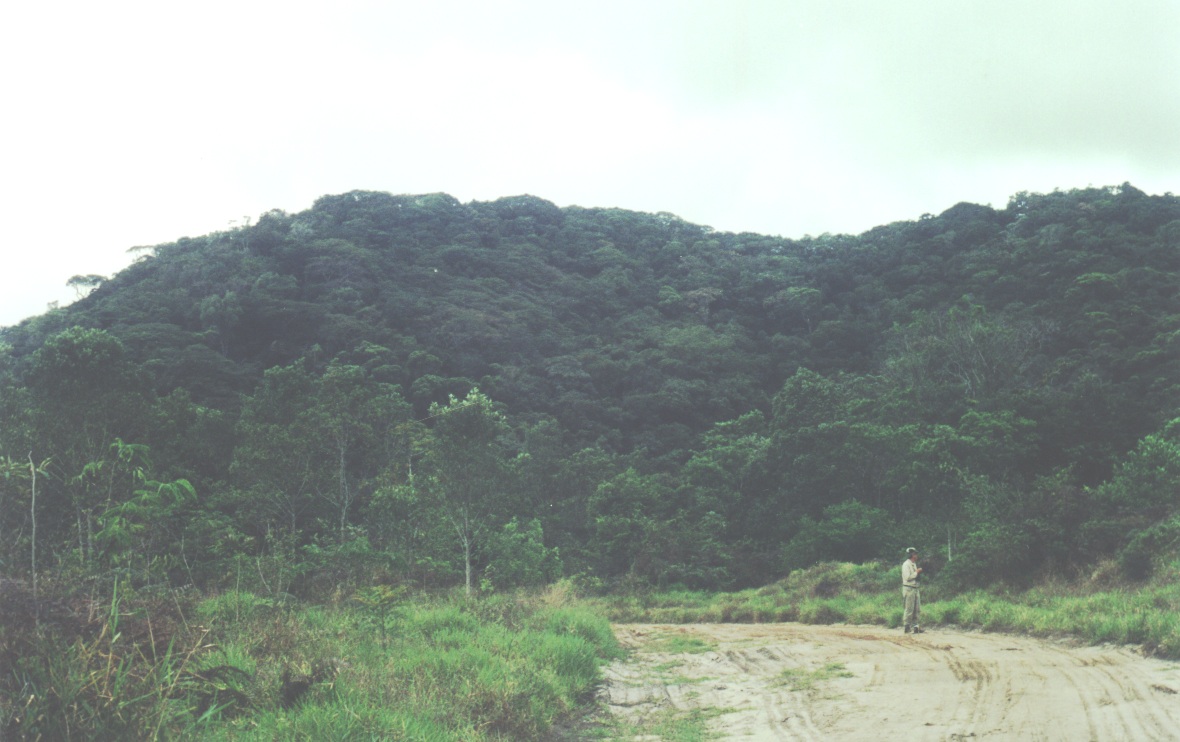
Cananeia. Primary and secondary Atlantic rainforest at Cananeia.
-
Crypturellus noctivagus, call. 10/14/99 Cananeia. Cloudy, 22°C. Forest. With Schiffornis virescens, Chiroxiphia caudata, Trogon viridis.
Where these come from
The work names each item by a file stem in its own caption records. The captions above are those records with the stem and its separators removed; where an item sat on the original page was not recorded and is not guessed.
- A88 original-cd/CD01/SEBrazil/PICTURE/A88.JPG
- 441003 original-cd/CD01/SEBrazil/WAV/441003.mp3
Works cited on this page
Numbers are the work's own; they address the Disc 1 · 2011 bibliography.
This page on the other discs
Disc 2 · 2001
Ornithology in Brazil 2 — The twentieth century · page 12 of that disc
The twentieth century
At the invitation of Goeldi Emilie Snethlage arrived at the Para Museum in Belem in 1905. She conducted numerous expeditions into Amazonia under difficult conditions and was a pioneer in Brazilian ornithological field research. She described 60 species new to science.
In 1929 Oliverio M. de O. Pinto, one of the great Brazilian ornithologists of all time, started to work at the Museu Paulista in São Paulo. He methodically explored Brazil and as the author of the Catologo das Aves do Brasil created the standard systematic reference work that is today indispensable for any study of Brazilian Birds.
Leaving Germany for Rio de Janeiro in 1939 Dr. Helmut Sick established himself there at the National Museum as a curator. His book entitled Birds in Brazil is a standard work in Brazilian Ornithology. William Belton lived for many years in Rio Grande do Sul and contributed innumerable observations to Brazilian ornithology. His important contribution is the study Birds of Rio Grande do Sul, Brazil which was published in 1984/1985.
Present notable ornithologists working in Brazil are Luis Pedreira Gonzaga, Jose Fernando Pacheco, Brett Whitney, Edwin O. Willis and Richardo Parrini, the re-discoverer of Calyptura cristata 95.
Disc 3 · 2006
This disc carries the same wording as shown above.
Source details
- Release
- Disc 1 · 2011
- Recovered title
- Ornithology in Brazil 2
- Recovered subtitle
- The twentieth century
- Source location
- original-cd/CD01/SEBrazil/DOCS/Discussn.dat:record=12,offset=768; original-cd/CD01/SEBrazil/DOCS/Sebrazil.dfd:nul_segments=84-90
- Decoded text
- recovered-front-matter-release-aware-v0.1/releases/CD01/INTRODUCTION_TEXT/12.txt
- Page boundaries
- derived from the accepted CD03 boundaries by index-title correspondence plus mechanical segment-stream alignment (CD03 136 segments -> CD01 131 segments); closed by contiguity. This is a provisional sequence: the pages are numbered and titled exactly as the disc's own index records them, but the division of the running text into pages is inferred by this project from the ordered content. The original program's page-link bytes were never decoded, so this is the best-supported order available, not a proven reproduction of the original page flow.
- Text status
- Decoded from the preserved bytes: each byte is one CP1252 character, code point = byte + 31. The work's own markup (font and colour changes, line breaks, scientific-name markers, reference citations) is rendered rather than shown as codes. No spelling, punctuation or typography has been changed.
- Encoding record
- front-matter-encoding-recovery-v0.1